Summary
- 01
Chrigel Maurer completed the 266km route in about 48 hours for his sixth Eigertour victory.
- 02
Lars Meerstetter and Tim Alongi finished second and third overall.
- 03
Romy Sweda won the women’s category and ranked tenth overall; storms and rain marked the opening day.
Two winners define the 2026 result
The Eigertour 2026 has produced a clear set of winners. Chrigel Maurer completed the 266km route in approximately 48 hours to take first place overall, earning his sixth victory at the event. Lars Meerstetter finished second and Tim Alongi third, an order confirmed by the organiser's official classification.
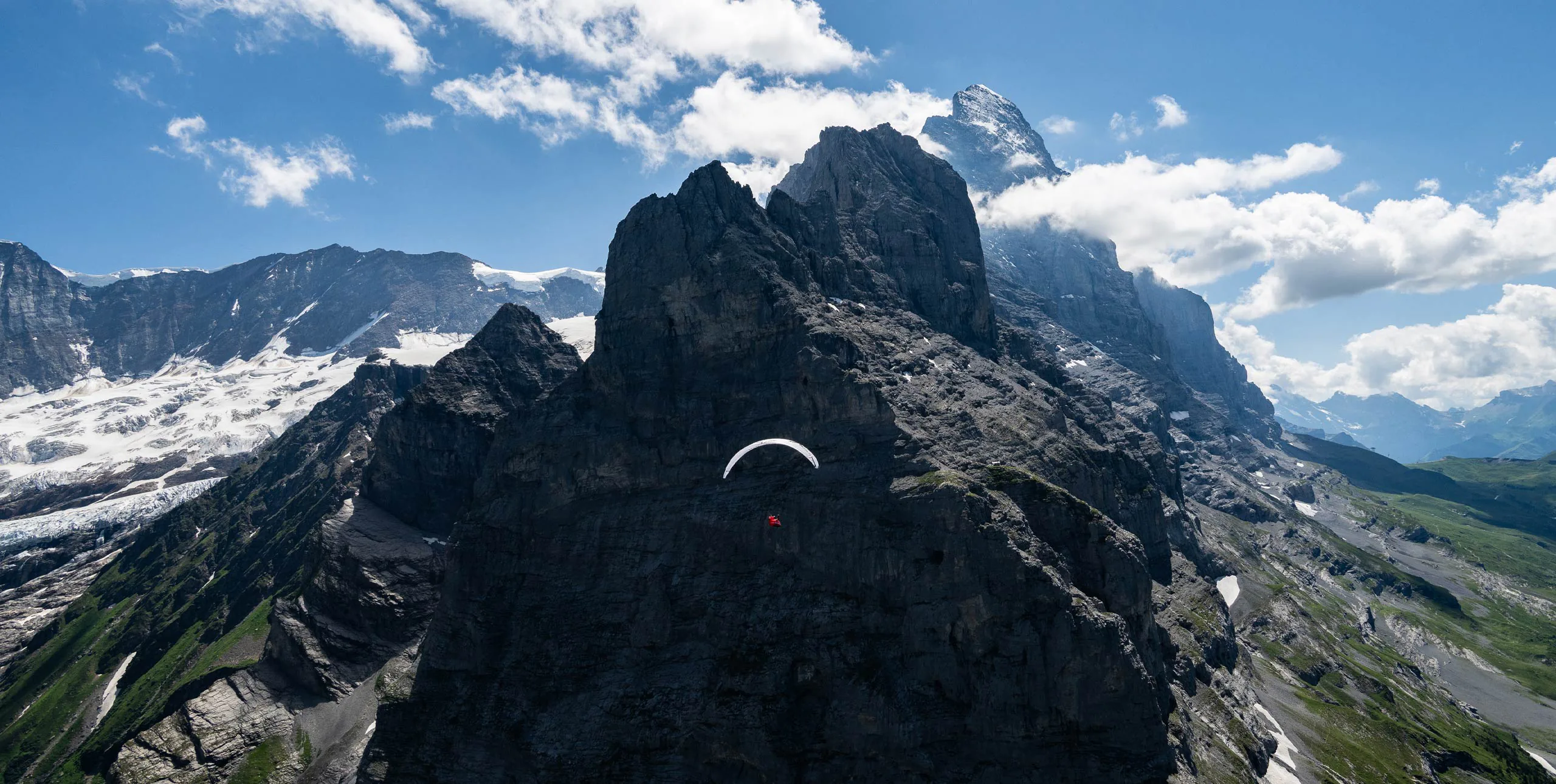
Romy Sweda won the women’s category and also placed tenth overall. That position makes the women’s victory visible both as a category result and within the ranking of the complete field. The confirmed record establishes her category win and overall position, but does not provide split times or gaps to adjacent competitors, so those comparisons cannot responsibly be added.
The scale of the win: 266km and about 48 hours
Two figures frame Maurer’s result: a route of 266km and an elapsed time of roughly 48 hours. They show that the performance is not a simple distance from one isolated flight, but an outcome measured across completion of an entire course. The total distance and approximate time are confirmed; the available evidence does not divide that time into flying, hiking or stationary phases.
A sixth victory places the 2026 result within Maurer’s longer Eigertour record. One result is enough to establish this year’s winner, while a total of six wins shows repeated success within the same event tradition. The routes, conditions and competitive fields of different editions cannot be treated as directly equivalent on the current evidence, so the count should not be turned into a cross-year performance formula.
Storms and rain shaped the opening day
Storms and rain affected the first day of the event. That fact supplies necessary context for the 2026 opening: competitors faced more than the stated distance, with severe weather adding operational and decision pressure. The confirmed record does not specify particular stoppages, course changes or the different effect on each competitor, so those details remain outside this account.
Weather can therefore be described as an important condition, but not used as a single explanation for any finishing position. The champion, podium and women’s result are established; understanding how each was built through individual decisions would require a fuller race record. Preserving that distinction avoids reducing a complex competition either to a simple ‘because of the weather’ or ‘despite the weather’ narrative.
Why the combined result matters
The first three overall places give the race its most direct competitive order: Maurer, Meerstetter and Alongi. At the same time, Sweda’s women’s victory and tenth place overall make both the category title and her position in the field visible. Reporting those lines together identifies the leading finishers without allowing the overall ranking to erase the separate women’s outcome.
The organiser has now published the complete classification, confirming Maurer, Lars Meerstetter and Tim Alongi as the first three overall and Sweda in tenth. Time gaps and finer race progression still require careful interpretation, but the core result is cross-checked between the official record and independent specialist reporting: Maurer took a sixth win and Sweda the women’s title.