Summary
- 01
Lower impact-force limits for competition paraglider harness back protection passed unanimously.
- 02
The Elevated Goal option passed almost unanimously, while a new Sports Class definition and ranking framework also passed.
- 03
CCC trim tolerance was tightened from 20mm to 10mm, with only two votes against.
A large rule agenda reaches decisions in Porto
The CIVL 2026 Plenary took place in Porto, Portugal, with delegates representing 29 countries. The meeting began with 96 agenda items, of which 77 proceeded to a vote. Those numbers show a governance session extending well beyond one amendment, with competition design, safety, equipment consistency and ranking structures all inside the decision-making programme.
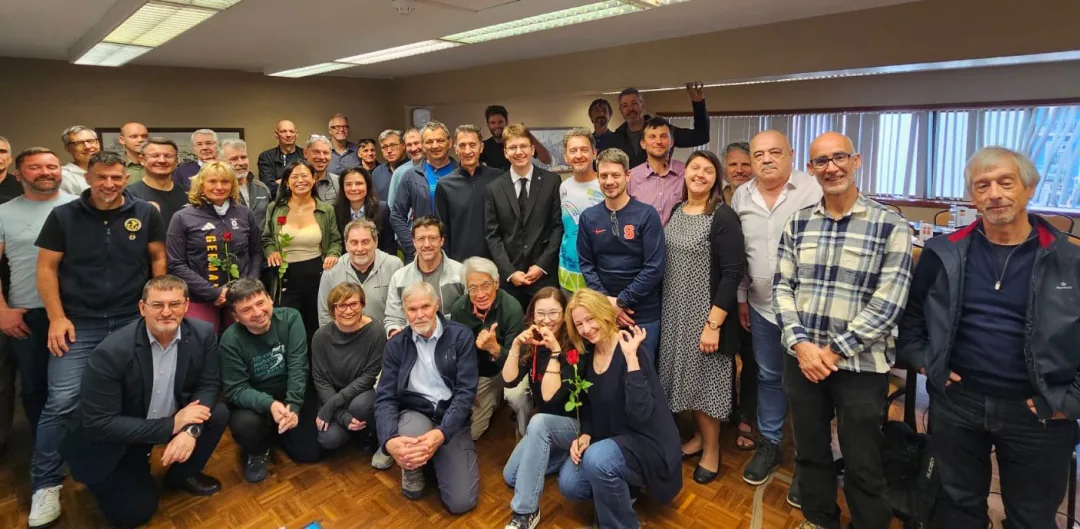
Among the outcomes, lower impact-force limits for competition paraglider harness back protection passed unanimously. The Elevated Goal option passed almost unanimously, and a new Sports Class definition with its ranking framework was approved. The permitted CCC trim tolerance was reduced from 20mm to 10mm, with only two votes against that change.
Harness limits point toward a stricter safety threshold
The harness proposal lowers the acceptable impact-force limit for back protection used in competition paraglider harnesses. A lower limit establishes a more demanding threshold in testing and compliance, while the unanimous vote shows no division among the delegates on the direction of the change. It stands as one of the clearest safety decisions from the plenary.
The confirmed outcome does not, in the factual record available here, provide the numerical limit, its effective date or transition arrangements. Manufacturers, organisers and pilots therefore cannot infer the immediate status of a particular harness merely from the vote. The next rule text will need to connect the adopted principle to tests, scope and implementation.
Competition design and equipment consistency both change
Elevated Goal was accepted as a new option for cross-country competition by an almost unanimous vote. The plenary outcome establishes the rule direction, but the current evidence does not define the option in enough detail to reproduce its operation. Scoring, goal geometry or procedures should not be invented before the formal wording is available.
Reducing CCC trim tolerance from 20mm to 10mm focuses on consistency in equipment condition. With only two votes against, the tighter number attracted broad support. The halving of the tolerance is a confirmed fact; how it will be measured, who will check it and what follows from non-compliance remain questions for the detailed technical rules.
Sports Class gains a new institutional basis
The plenary also approved a new Sports Class definition and associated ranking framework. The decision concerns more than terminology: it establishes a basis for deciding how a class of competitors and results is organised, identified and compared. The approval is confirmed, but the available material is not sufficient to publish qualification boundaries or ranking calculations.
Taken together, Sports Class, trim tolerance, Elevated Goal and harness limits show CIVL addressing participation, competition design, equipment consistency and safety in parallel. They are different kinds of rule, yet they can meet in event delivery. Coordination between the eventual texts will therefore matter as much as each vote considered by itself.
The next developments to watch are publication of the formal rules, effective dates, transition provisions and implementation guidance for organisers. A vote establishes direction; precise wording determines when and how equipment, procedures and ranking systems change. Until those details appear, the approved outcomes can be reported firmly while their unconfirmed implementation remains outside the factual account.