Summary
- 01
The CIVL Plenary approved a reduction from 20 mm to a plus-or-minus 10 mm tolerance for the CCC relative-line-length angle-of-attack check, with only 2 votes against.
- 02
The 2026 Section 7G took effect on 1 May and compares the average A-to-B line-group difference with the manufacturer's manual value.
- 03
The primary documents directly confirm the change for CCC wings in FAI Category 1 cross-country events, not automatically for every EN-C, EN-D or local competition.
A 20 mm allowance becomes a 10 mm limit
The FAI Hang Gliding and Paragliding Commission, CIVL, has narrowed the relative-line-length angle-of-attack tolerance for CIVL Competition Class wings from 20 mm to plus or minus 10 mm. FAI's official account of the 2026 Plenary says only 2 votes opposed the proposal. The published Section 7G is effective from 1 May 2026, turning the decision into a current rule rather than a proposal awaiting implementation.
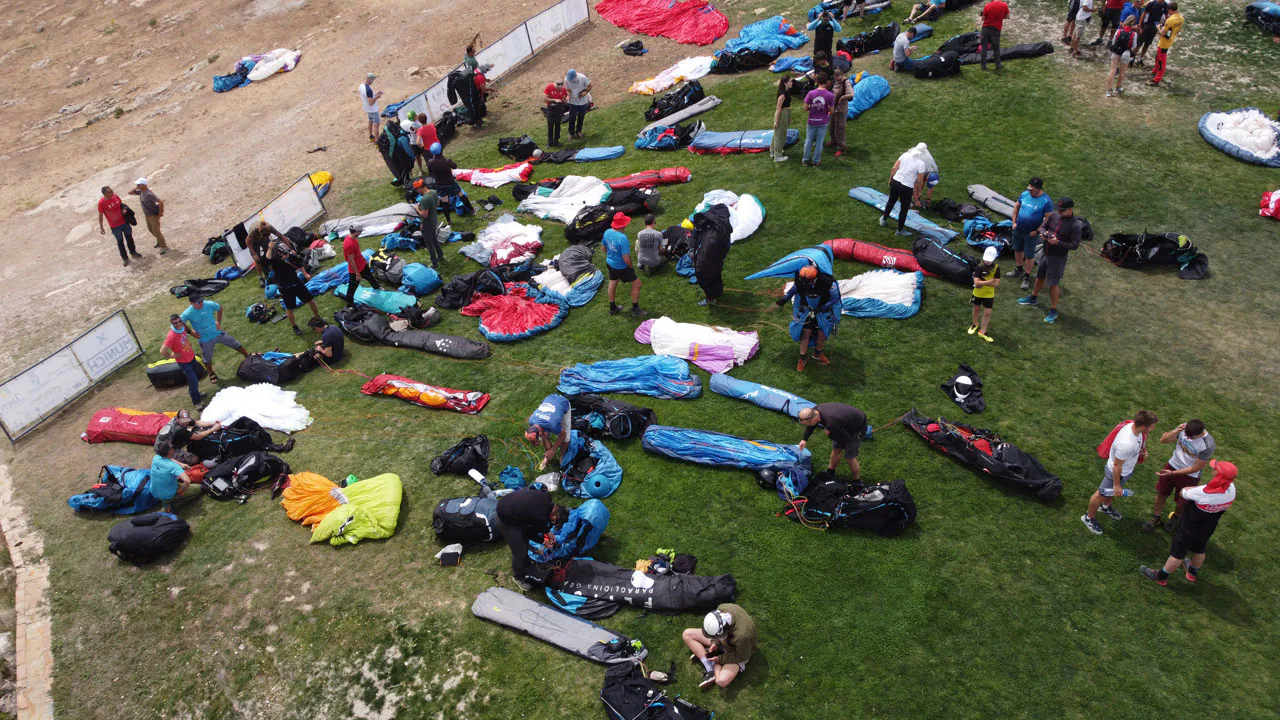
The check does not treat one isolated line as the whole result. Inspectors measure from the carabiner end of the riser to each canopy attachment, average the lengths within the A and B main-line groups, and compare their difference with the value in the manufacturer's manual. A wing passes within 10 mm either way; a fast trim beyond minus 10 mm fails, while a slow trim beyond plus 10 mm triggers a warning that the wing is out of trim and potentially unsafe.
The change targets fairness and the purpose of maintenance tolerance
FAI says the former 20 mm allowance existed to accommodate manufacturing variation and the stretching or shrinking of lines between inspections. It was not intended as an extra speed range. Manufacturing accuracy has improved, while some competitors had used the spare tolerance to fly faster than the certified configuration. The official rationale therefore joins two concerns: comparable equipment at the start line and less incentive to alter a wing away from its documented geometry.
For pilots, the narrower range makes measured line geometry a more explicit part of competition preparation. Manufacturers must supply the design lengths and measurement references in the manual, while organisers have a published procedure that may be used at events. The rule does not identify any manufacturer or model as non-compliant, and it does not prove that every wing carrying an older certificate had been adjusted for extra speed.
The confirmed scope should not be stretched
The primary documents directly establish the 10 mm requirement for CCC paragliders used in FAI Category 1 cross-country events. Section 7G also permits EN-certified paragliders, and CIVL has introduced a separate Competition Sport Class specification, but neither fact is enough to say that every EN-C, EN-D, PWCA round or national competition automatically applies the identical check. Pilots still need the local regulations, equipment bulletins and inspection plan for the event they intend to enter.
Old certificates remain valid, but an individual wing still has to conform
Section 7G states that revisions do not retrospectively cancel CCC certifications already issued, so existing certifications remain valid. That is different from saying that every physical wing will pass a competition measurement. The next evidence to watch is practical implementation: which Category 1 events perform line checks, how supplementary rules describe them, and whether manufacturers issue revised maintenance or retrim guidance for pilots working within the new 10 mm boundary.